

Found the Right Location but Not the Right House? Maybe You Build It.
Found the Right Location but Not the Right House? Maybe You Build It.
Going from vacant land to a finished homesite can feel almost unimaginable.
You pull up a land listing online and see trees.
Maybe there isn't a driveway yet. There isn't a house to walk through. There isn't a kitchen to fall in love with or a backyard where you can picture your family.
There's just… land.
And for a lot of buyers, that's where the idea stops.
Not because they wouldn't love to build a home, but because they have no idea what happens next.
How do you buy the land?
Can you finance it?
How much do you need down?
How do you know whether you can actually build there?
When do you call a builder?
What about clearing, utilities, septic and a driveway?
Do you buy the land first or get a construction loan?
It can feel like too many unknowns, so buyers go back to searching for an existing house—even when none of those houses are really what they want.
But here's the part I think more buyers should consider:
Location is the one thing about a home you can't change.
You can remodel a kitchen. You can replace flooring. You can add a deck, change paint colors and completely transform a house.
You can't pick it up and move it to the location you really wanted.
Sometimes, the best way to get the home you want where you actually want to live is to start with the land.
Building Doesn't Have to Mean Building a Mansion
When people hear custom home or new construction, they often picture an enormous luxury house with an enormous budget.
It doesn't have to look like that.
A beautiful homesite could be a modest farmhouse tucked into the trees. A barndominium with a workshop. A smaller, thoughtfully designed home with a big porch. A simple house positioned to preserve privacy and take advantage of the property.
The goal isn't necessarily to build more.
It's to build what works for you.
And when you're starting with vacant land, you get to think about things buyers of existing homes often can't control: where the home sits, which trees remain, where the driveway enters, how much privacy you have, where your outdoor space goes and how the property functions as a whole.
So How Do You Actually Go From Vacant Land to a Home?
It starts before you ever pour a foundation.
The first step is understanding the land itself.
What can be built there? Are there restrictions? What utilities are available? Will you need a well or septic system? What access, permitting, drainage, floodplain, easement or site-preparation considerations need to be investigated?
That's why buying land shouldn't simply be, “This is pretty. Let's buy it.”
There needs to be a feasibility conversation.
Then comes financing.
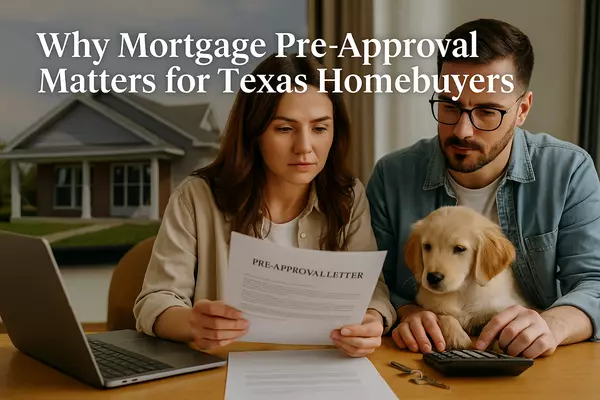
Depending on the property, borrower, builder and loan program, there may be options for a land loan, a construction loan, or financing structured around both the land and future construction.
If you already own the land, the equity in it may also play a role in future construction financing depending on the lender and program.
The important thing is that you don't necessarily have to understand all of this before you start looking.
You need the right people around you who do.
From there, you can begin talking with builders, evaluating potential homesites and getting a clearer understanding of the total project—not just the price of the dirt.
The process starts looking a lot less mysterious:
Land → Feasibility → Financing → Builder → Construction → HOME
This Is Why I Started Showing Buyers the Possibility
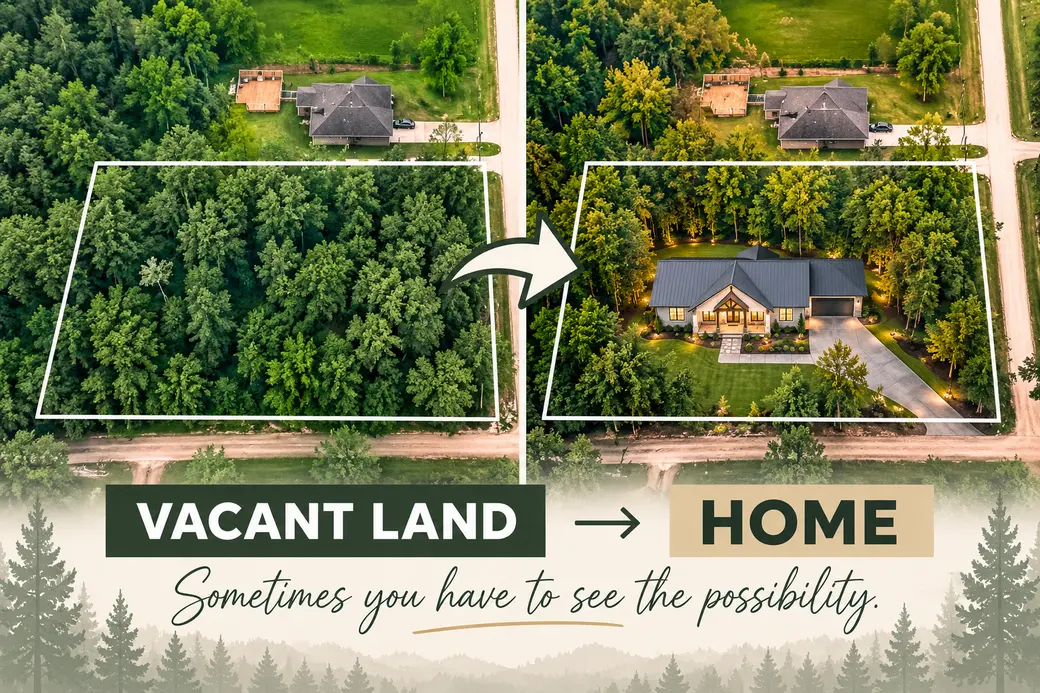
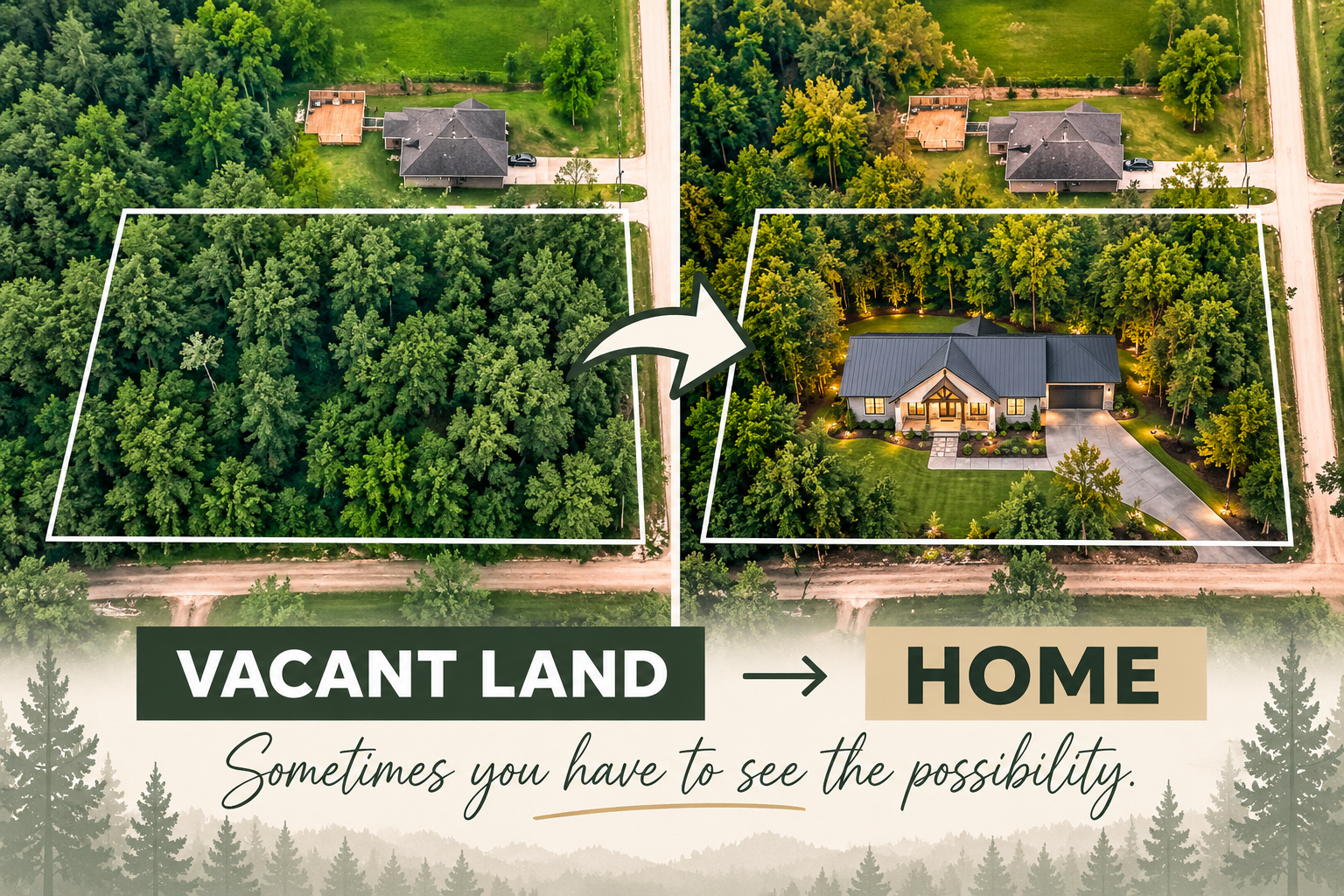
I'm currently marketing a wooded 1.37-acre property in the Lake Houston Forest area of Huffman, Texas.
When you look at the property today, you see mature trees and vacant land.
But that's not necessarily what it could look like five years from now—or even two years from now.
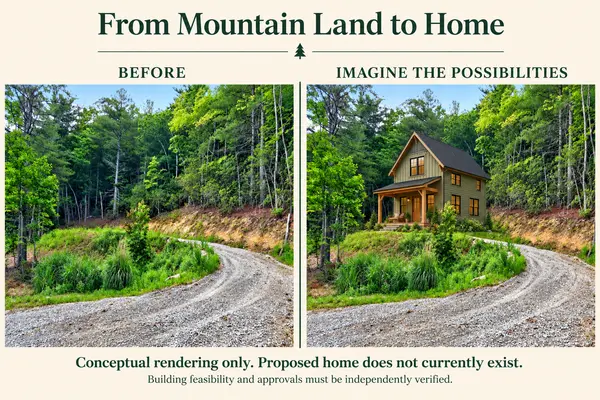
So instead of only showing buyers photographs of trees, I've started creating conceptual visualizations that help them imagine a modest home nestled into the property, a driveway coming through the trees, outdoor space and the privacy that more than an acre can provide.
The images aren't building plans, promises of what can be constructed, or representations of the property's current condition.
They're there to answer one simple question:
“What could this become?”
Because sometimes people need to see the possibility before they can imagine themselves creating it.
Don't Automatically Skip the Land Listings
If you've been searching for a home and keep thinking:
I love the area, but I don't love any of these houses…
Don't automatically assume your only options are to settle for the wrong house or move somewhere else.
There may be another option sitting in your search results that you've been scrolling right past.
The land.
Start with the location you love. Determine whether the property can support what you want to build. Understand the complete financial picture. Talk with the right lender and builder.
Then decide whether building makes sense for you.
You don't have to know how to do every part of it yourself.
That's what your team is for.
And as someone who works across real estate and financing, this is exactly the kind of puzzle I love helping people work through—looking beyond the listing itself and helping you understand the different paths available to get where you're trying to go.
Maybe the perfect house isn't already out there waiting for you.
Maybe you build it.
Thinking about buying land or building in Texas?
Whether you've already found a property or you're just wondering if building could realistically work for you, reach out. We can start with the land, talk through the questions you should be asking, and connect the pieces from there.
Miriam Blazier, REALTOR®
PREMIERE Group at Real Broker, LLC
📱 936-828-1153
🌐 miriamblazierrealtor.com
Categories
Recent Posts



Miriam Blazier
Phone